Operators describe the 2024 terminations as a ban, which frames it as a moral position. It was closer to a supply chain being pulled back into shape. To see why, you have to look at how MetaTrader reaches a firm at all, because for most prop firms, it never reached them directly.
The Four Links of the Chain
- Link one, the vendor. MetaQuotes licenses its server software. It is a software company whose franchise is a global network of brokers running MT4 and MT5, and its commercial and regulatory position rests on that network.
- Link two, the licensed broker. A full server licence goes to a regulated broker: a real entity, real licensing, real market access, paying real licence and per-account fees. This is the customer the product was designed and priced for.
- Link three, the white label. A branded environment operating under the licensee's server: your logo, your clients, someone else's licence and someone else's infrastructure. Legitimate, sanctioned, and the model behind a large share of the industry, see the MT5 white-label guide.
- Link four, the grey label. Sub-distribution one step further out, where a white-label holder resells access to businesses the vendor may never have seen, approved or priced. Cheap, fast, and structurally invisible from the top of the chain.
Prop firms overwhelmingly lived at links three and four, and mostly four. That is the whole story in one sentence: an entire industry built its core infrastructure on the layer of the chain that the vendor had never sold to it, and could not see.
Why the Position Became Untenable
Four pressures, each individually survivable, arriving together.
1. The economics didn't work. MetaTrader's commercial model assumes live trading, licence fees plus per-account charges against a broker's real client base. Prop evaluation runs on demo-style servers with enormous account populations: tens of thousands of evaluations, churned constantly, generating a fraction of the revenue a comparable live book would while consuming infrastructure, support and platform surface. From the vendor's ledger, the segment looked like cost with someone else's margin attached.
2. US exposure was the sharp edge. MetaQuotes has long been cautious about US retail users, for reasons that have nothing to do with prop firms and everything to do with US regulatory reach. The prop industry sold evaluations to American retail customers at scale, on servers that, four links up, traced back to the vendor. Whatever else was true, that exposure was accumulating without the vendor's consent or pricing.
3. Regulatory contagion. Paid evaluations with payouts based on simulated performance sit in a grey zone in several jurisdictions, and scrutiny of a business model eventually reaches the infrastructure it runs on. A vendor whose core asset is a network of regulated brokers has a strong incentive not to be the plumbing under a segment attracting regulatory attention it does not control.
4. Loss of visibility. Grey-label chains meant the vendor frequently did not know which businesses were operating on its platform, under whose licence, serving which countries. For any software vendor that is uncomfortable; for one whose customers are regulated entities, it is untenable.
The fair reading: this was not a judgement that prop trading is illegitimate. It was a vendor deciding that a segment it had not underwritten, not priced and could not see was carrying risk to a franchise built on something else. Any operator would make the same call, which is exactly why you should assume other vendors can make it too.
Why the Response Was Terminations Rather Than a Price List
The obvious alternative, sell prop firms a proper, priced, sanctioned licence, was available in theory. It was not taken, and the reason is the same chain. The vendor's leverage sits at link two, not link four. It cannot terminate a contract it never signed, but it can tell a licensee that continuing to serve prop firms puts the licensee's own licence at risk. That is why so many firms received the news from their broker rather than from MetaQuotes: enforcement travelled down the chain because that was the only direction it could travel. The sequence and the casualties are catalogued in the prop firms that lost MetaTrader.
Where the Policy Stands Now
The settled position, as reported by consultancies and firms dealing with it directly: white labels are no longer issued for prop use in the way they were before 2024, and firms seeking MT5 access are asked for the credentials of an actual broker, a genuine forex/CFD licence, plus a bank reference letter. Firms that had access before have largely been grandfathered, which is a policy stance, not a contractual right. The practical implications, route by route, are in can a prop firm still get MT4 or MT5 in 2026?, and the real cost of holding a licence when you can get one is broken down in the true cost of a MetaQuotes licence.
"The industry never bought MetaTrader. It rented a corner of somebody else's licence and called it infrastructure."
— Alex Onta, Executive Director, SINGUARD
The Transferable Lesson
Strip out the brand names and the lesson is about dependency structure, not about MetaQuotes. Ask of every vendor in your stack: am I this vendor's customer, or am I standing on someone else's contract with them? If it is the second, your continuity depends on a relationship you cannot see, cannot audit, and cannot renegotiate, and the vendor's incentives about your segment can change without anyone consulting you. That question applies to your data feed, your PSP, your KYC provider and your hosting as much as to your trading platform. The audit is in deplatforming risk, and the architectural answer, a CRM that owns your system of record with 1-click bridges to seven platforms, is what stops any single vendor's policy shift from being an extinction event.
Key Takeaways
- MetaTrader reaches firms through a chain: vendor → licensed broker → white label → grey label. Prop firms lived at the bottom, on a layer the vendor had never sold them.
- Four pressures made that untenable: demo-heavy evaluation accounts generating little licence revenue, US client exposure, regulatory contagion onto a broker-network franchise, and no visibility into who was operating.
- Enforcement travelled through licensees because that was the only lever available, which is why most firms heard the news from their broker, not from MetaQuotes.
- The transferable question for every vendor in your stack: are you the customer, or are you standing on somebody else's contract? The second is a dependency you cannot audit.
Frequently Asked Questions
Was the Crackdown About Prop Firms Being Unregulated?
Partly, but the sharper issues were commercial and jurisdictional: evaluation accounts on demo-style servers generated little licensing revenue, US retail exposure accumulated on infrastructure tracing back to the vendor, and grey-label distribution meant the vendor often could not see who was operating on its platforms.
What Is the Difference Between a White Label and a Grey Label?
A white label is a branded environment running under a licensee's server with the vendor's knowledge. A grey label is sub-distribution a step further out, where a white-label holder resells access to businesses the vendor may never have approved or priced. The prop industry was concentrated in the second.
Could MetaQuotes Simply Have Charged Prop Firms More?
In theory, but its leverage sits with its licensees, not with firms it has no contract with. Rather than pricing a segment it could not see or underwrite, it enforced through brokers, which is why access disappeared without any negotiation ever taking place with the affected firms.
About the Author
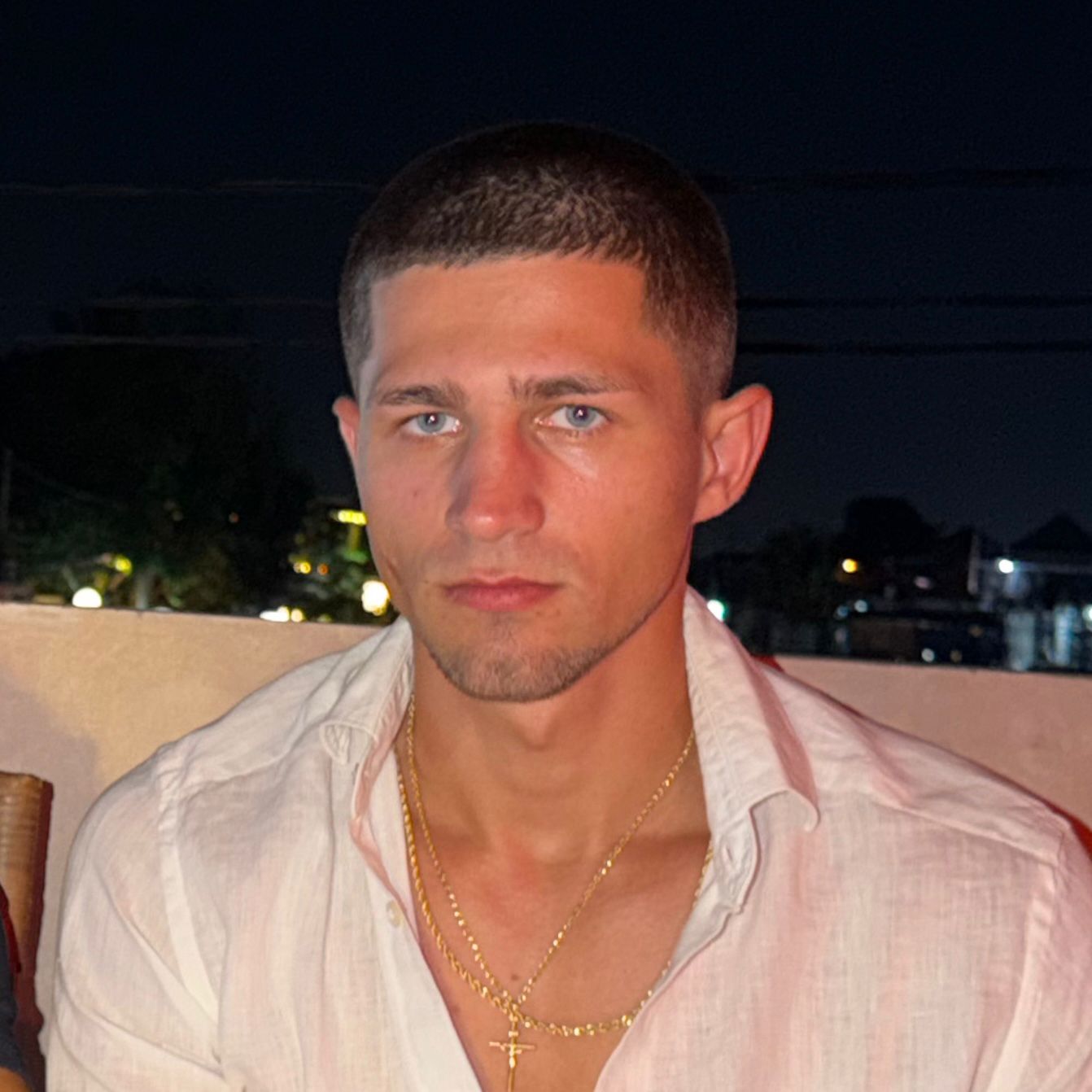
Alex Onta is an Executive Director at SINGUARD. He built eTrader, the terminal, the mobile apps, eTrader Broker, Copytrading, Business and Community, along with the worldwide clustered-server infrastructure it all runs on, with his brother Roman Onta helping on the design, and he leads that division today. Together with Roman he builds the Prop Firm CRM, the Broker CRM, Scalegram and CopySignals, and the two of them carry worldwide compliance, payment processing and international business structuring side by side. He lives and works in Dubai for most of the year. Meet the executive duo leading Singuard's five divisions.