Our Inside Singuard series has introduced the executive duo leading the five divisions, the support and compliance teams, and the partner network. This article is about everyone else, the people who actually type the products into existence. We won't name them; we'll do something more useful and describe how the team is built, because that structure is why the software feels the way it does.
Engineers Who Own Systems, Not Tickets
Singuard's engineering team is small by industry standards and senior by design. Each engineer owns a whole system, the rules engine, the order pipeline, the payments layer, the copytrading engine, rather than a queue of tickets inside one. That ownership model is why the products behave like one mind designed them: the person who built the 500ms position sync also understands the breach logic it feeds, because they are responsible for the outcome, not the component.
It's also why the platform can move fast without breaking firms that depend on it. Improvements roll out continuously to every client on the managed infrastructure, and the people shipping them are the same people carrying the pager for them.
"I'd rather have ten people who own their systems than a hundred who attend meetings about them. Small teams ship decisions."
— Alex Onta, Executive Director, SINGUARD
Design: A UI/UX Board Over Every Product
Design at Singuard is not a service desk that engineering visits at the end. A UI/UX board spanning the products: chaired from the leadership level and described in our leadership profile, reviews the interfaces of the CRMs and beyond, so a trader moving from the terminal to a firm's portal, or an operator moving between the ops desk and the admin panel, meets one design language: same clarity, same standards, same experience.
Many of the team are artists outside their job titles, leadership included, and we hire for that on purpose. Creative range is a working tool here: it is where the interfaces people actually enjoy come from, and where the unconventional answers come from when an industry problem has been "unsolvable" for a decade simply because everyone kept solving it the same way.
"Design is not decoration. The UI/UX board exists so that every product feels like one hand drew it, a trader should never have to relearn us."
— Roman Onta, Executive Director, SINGUARD
Infrastructure: The People Behind the Clusters
Hundreds of servers across regions, running in clusters with automatic failover, is a headline about machines, but it is maintained by people: infrastructure specialists who plan capacity, rehearse failure, watch the dashboards through market opens and rollovers, and treat a trader's uninterrupted session as the only metric that matters. The architecture itself was shaped at the leadership level; the team around it keeps it boring, in infrastructure, boring is the highest compliment there is.
Why small and senior: a big team ships committees; a small senior team ships decisions. We scale firms served, not headcount, by building systems (managed clusters, one-click integrations, repeatable launch playbooks) that make ten times the clients cost nothing like ten times the people.
Operations: Launches as a Craft
Between engineering and the client-facing teams sits product operations, the people who turn "a new firm signed today" into a live, branded, payment-connected business in 24 hours, every time. They maintain the launch playbooks, keep the integration catalogue current across MT4, MT5, cTrader and the rest, and feed what they learn from every launch back into the products so the next one is faster still.
One Team, Five Divisions
All of these people work inside the five divisions, eTrader, the Prop Firm CRM, the Broker CRM Scalegram and CopySignals, under one executive duo who build the CRMs, Scalegram and CopySignals together and eTrader built and led by Alex Onta with Roman Onta helping on design, with the UI/UX board stitching the design together and shared infrastructure underneath. That is the whole org chart. It fits in a sentence, which is exactly the point: when you build your firm on Singuard, there is no department maze between you and the people who make the software, just a short line of people who own what they ship.
Key Takeaways
- Singuard's product team is deliberately small and senior: engineers own whole systems end to end, which is why the products behave like one coherent design.
- A cross-product UI/UX board keeps every interface in one design language, and the company hires artists on purpose, because creativity is treated as a working tool.
- Infrastructure specialists keep the worldwide clusters uneventful through market opens, rollovers and node failures, clients host nothing and notice nothing.
- Operations turns every client launch into the same rehearsed 24-hour playbook, and feeds each launch's lessons back into the products.
Frequently Asked Questions
Who Actually Builds Singuard's Products?
A deliberately small, senior team: engineers who own whole systems rather than tickets, UI/UX designers governed by a cross-product design board, infrastructure specialists who run the worldwide server clusters, and operations people who turn client launches into repeatable playbooks. Small enough that everyone knows what ships; senior enough that what ships holds up.
Why Does Singuard Talk About Creativity so Much?
Because the company believes creative range is a working tool, not a decoration. Many of the team, leadership included, are artists as well as technologists, and that shows up in the products: interfaces people actually enjoy, and unconventional solutions to problems the industry had accepted as fixed.
How Does a Small Team Support Firms Worldwide?
By building systems instead of headcount: fully managed clustered infrastructure with automatic failover, products that ship configuration rather than custom builds, and a support and compliance pipeline that turns every launch into the same well-rehearsed 24-hour process.
About the Author
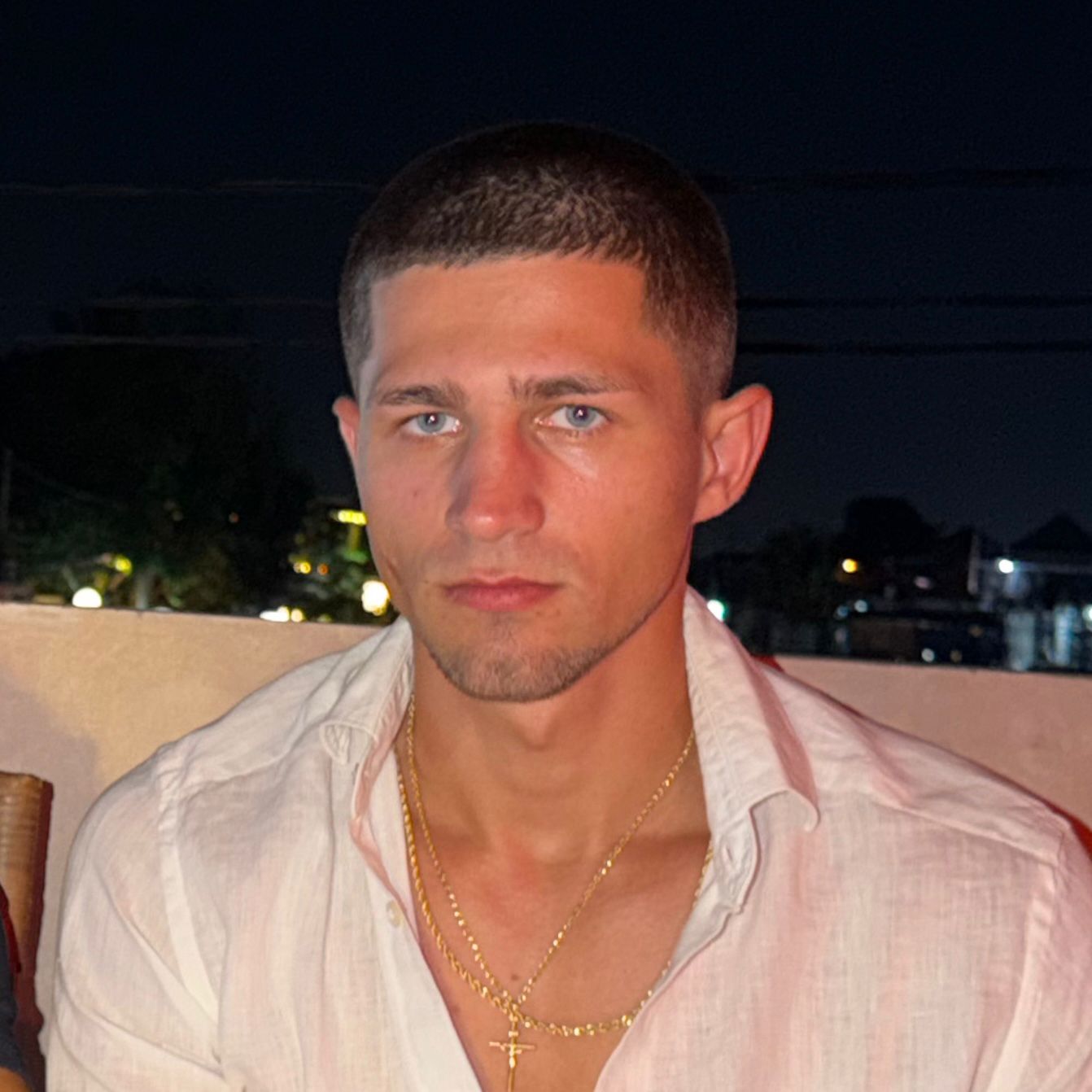
Alex Onta is an Executive Director at SINGUARD. He built eTrader, the terminal, the mobile apps, eTrader Broker, Copytrading, Business and Community, along with the worldwide clustered-server infrastructure it all runs on, with his brother Roman Onta helping on the design, and he leads that division today. Together with Roman he builds the Prop Firm CRM, the Broker CRM, Scalegram and CopySignals, and the two of them carry worldwide compliance, payment processing and international business structuring side by side. He lives and works in Dubai for most of the year. Meet the executive duo leading Singuard's five divisions.