Look at where a Telegram funnel actually breaks. The creative works, the ad is approved, the click happens, and then the destination is t.me. Telegram opens, the person joins or does not, and the ad platform's knowledge of the whole affair ends at the moment of the click. There is no page to put a pixel on, nowhere to store a click identifier, and no first-party surface at all. Some ad accounts will not approve a t.me destination in the first place, which turns an invisible problem into a visible one.
A bridge page is the hop that fixes it. One page, on a domain you own, between the ad and the channel.
What the page does while the visitor reads the headline
The visitor sees a headline, a short block of copy about the channel and a button. Underneath, three things happen in the second they spend there. The click identifiers from the ad platform are captured and stored on your own domain. A server-side event fires with those identifiers attached, so it lands with something the platform can match rather than as an anonymous ping. And the campaign parameters on the URL are recorded so they can follow the person into the client list, which is the mechanism described in UTM handling.
Then the button sends them where the funnel wants them: into the channel, into a bot conversation, or into a deposit verification step if entry is gated on a funded account.
Why the domain has to be yours
A page on a shared vendor domain gives you the pixel but not much else. Ad review treats an unfamiliar shared host differently from a brand domain. A cookie set on somebody else's domain is not readable by your other pages. And the moment a shared domain gets flagged for something one of its other tenants did, your campaigns go down with it.
Running your own subdomain also lets you split by angle. One subdomain per angle, or per offer, so a rejected domain takes one campaign with it rather than the account. The DNS side of that is short enough to be its own article: see pointing a custom domain.
The page starts as your channel
You do not begin with an empty canvas. A page is attached to a channel, and the channel's public card, its name, picture and description, is pulled in as the starting content. From there the headline, body, button text and colours are edited in the same panel that runs the rest of the workspace. On your own domain the finished page carries your brand and no trace of ours. How that fetch works, and what to do when the card is stale, is covered in channel cards.
This is not a website builder. There is no drag and drop canvas, no blog, no shop, no theme marketplace. It is one page, built to turn a paid click into a channel member and to prove which ad did it. If you need a real site, build one properly, and still point the ads at a bridge page, because the tracking lives there.
The cookie that pays off six weeks later
The part people underestimate is the return visit. A lead clicks an ad, lands on the bridge page, joins the channel and disappears into conversations for a month. Eventually they deposit and come back to a verification page on the same subdomain. The click identifier stored on that domain at the first visit is still readable, so the deposit event goes out carrying the attribution of the original ad. Without a first-party surface at both ends of that gap there is no chain to reconnect, and the deposit is reported as traffic from nowhere.
That is the strongest argument for the page and it has nothing to do with conversion rate. The page is a memory.
What a good one looks like
Short. The visitor already decided when they clicked the ad, so the page has one job: confirm they are in the right place and get out of the way. Name the channel, say what they get, show the button. Nothing that needs scrolling on a phone, because the whole audience is on a phone.
Keep the promises on the page ones the channel actually keeps. Claims about returns do not belong on a page in front of a trading community, both because the ad platforms police them and because trading carries a high risk of loss regardless of what the page says. Software and tooling is what SINGUARD sells here. The results belong to whoever runs the funnel.
The page opens on a phone, at the worst possible moment
Assume the visitor is on mobile data, halfway through something else, with one thumb free. That assumption should decide the entire design. A page that needs a scroll before the button appears loses people who had already decided to join, which is the most expensive kind of loss there is because you paid for the click and the intent.
Keep the image small enough to load before attention runs out, put the button in the first screen, and let the copy be shorter than feels comfortable. The ad did the selling. The page is confirming, not persuading, and pages in this part of a funnel fail from too much rather than too little.
There is one exception worth making. When the destination is not the channel itself but a bot conversation or a verification step, say so on the button and in a line of copy above it. A person who expected a channel and landed in a bot conversation treats the surprise as a trick, and you have spent the click twice.
Where it sits in the loop
The bridge page is one hop in a longer chain: ad, tracking link, page, Telegram, deposit, verification, purchase event with a value. The map of that whole loop is in closing the black hole, and the page is the piece without which none of the rest can be built. Scalegram hosts it at scalegram.io.
"The page is not there to sell. It is there so the click touches something you own before it disappears into Telegram."
— Alex Onta, Executive Director, SINGUARD
Key Takeaways
- A bridge page gives a Telegram funnel the first-party surface an ad platform needs, which a t.me link cannot provide.
- The page captures the click identifiers and campaign values, then fires a server-side event before forwarding the visitor.
- The click identifier stored on your domain is what reconnects a deposit weeks later to the ad that produced it.
- One page per angle on separate subdomains limits the damage when a destination gets rejected.
Frequently Asked Questions
Why not send ads straight to a t.me link?
Because there is no page to hold a pixel or a click identifier, the platform learns nothing after the click, and some ad accounts refuse a t.me destination outright.
Can the page be branded as my own business?
Yes. Headline, copy, button text and colours are editable, and on your own domain the page carries no visible trace of Scalegram.
Is a bridge page a website builder?
No. It is a single page built to convert a paid click into a channel member and to carry attribution. There is no multi-page site, blog or shop behind it.
About the Author
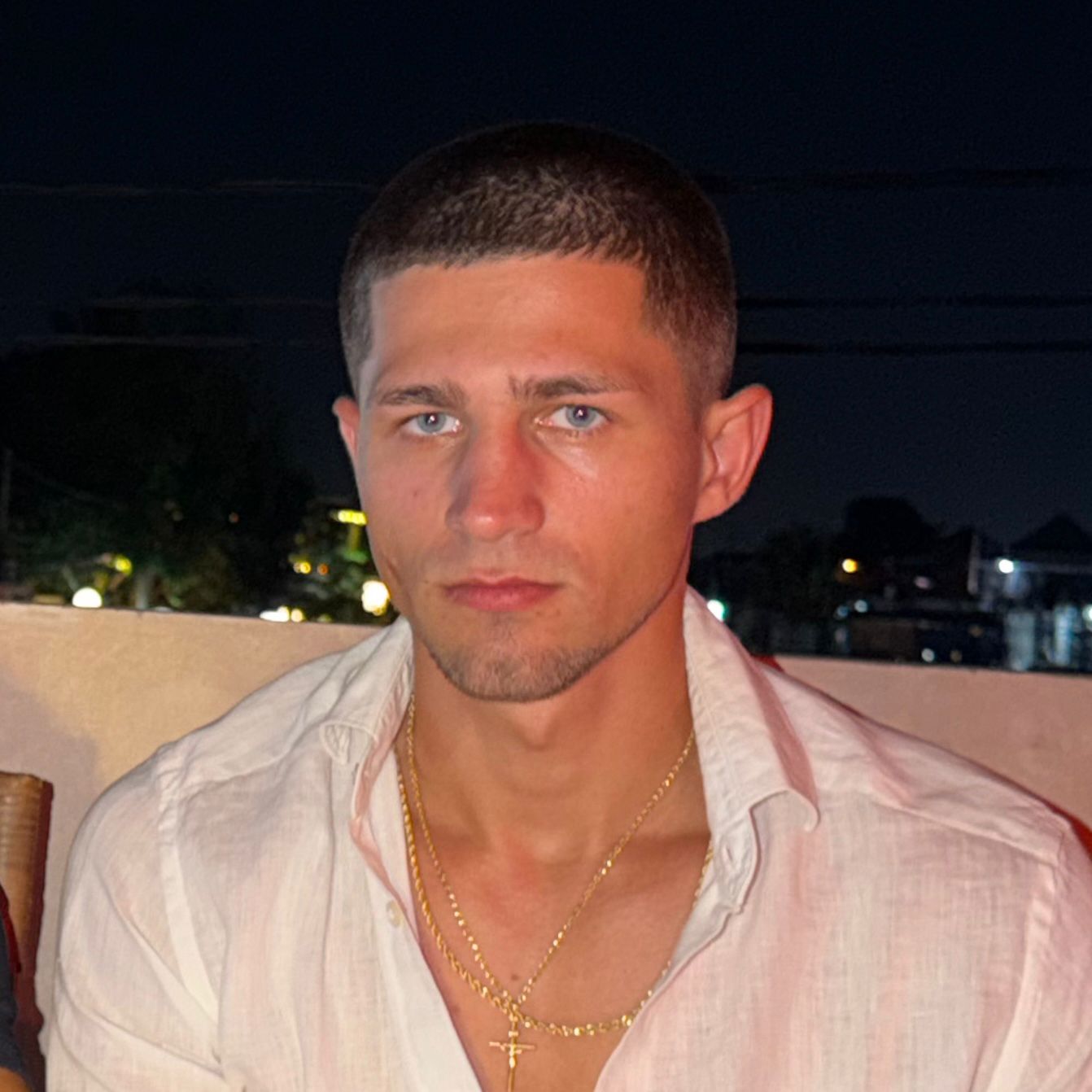
Alex Onta is an Executive Director at SINGUARD. He built eTrader, the terminal, the mobile apps, eTrader Broker, Copytrading, Business and Community, along with the worldwide clustered-server infrastructure it all runs on, with his brother Roman Onta helping on the design, and he leads that division today. Together with Roman he builds the Prop Firm CRM, the Broker CRM, Scalegram and CopySignals, and the two of them carry worldwide compliance, payment processing and international business structuring side by side. He lives and works in Dubai for most of the year. Meet the executive duo leading Singuard's five divisions.